Re-designing services for kids with special needs
For families raising children with special needs in Estonia, getting the right support meant fighting a system that wasn't built for them. Parents were expected to navigate fragmented services across health, education and social care - often alone, often without knowing what they were entitled to, and often at an already difficult time. In 2021, the Estonian government recognised the system needed rethinking and initiated a reform through the Ministry of Social Affairs. Our design team was commissioned to find out what was actually broken and design what better could look like.
client
Estonian Ministry of Social Affairs
agency
freelance
my role
researcher & servce designer
design team
Ruth Melioranski
Triin Jürgens
tools
Miro
Adobe InDesign
project timeline
June 2021 - Dec 2022
Re-designing services for kids with special needs
For families raising children with special needs in Estonia, getting the right support meant fighting a system that wasn't built for them. Parents were expected to navigate fragmented services across health, education and social care - often alone, often without knowing what they were entitled to, and often at an already difficult time. In 2021, the Estonian government recognised the system needed rethinking and initiated a reform through the Ministry of Social Affairs. Our design team was commissioned to find out what was actually broken and design what better could look like.
client
Estonian Ministry of Social Affairs
agency
freelance
my role
researcher & servce designer
design team
Ruth Melioranski
Triin Jürgens
tools
Miro
Adobe InDesign
project timeline
June 2021 - Dec 2022
Re-designing services for kids with special needs
For families raising children with special needs in Estonia, getting the right support meant fighting a system that wasn't built for them. Parents were expected to navigate fragmented services across health, education and social care - often alone, often without knowing what they were entitled to, and often at an already difficult time. In 2021, the Estonian government recognised the system needed rethinking and initiated a reform through the Ministry of Social Affairs. Our design team was commissioned to find out what was actually broken and design what better could look like.
Methodology & approach
Our starting point was simple: every person, regardless of ability, should be able to participate fully in society, and the system around them needs to work as one.We approached the project with a generative design methodology, combining deep listening through interviews and co-design through workshops. We spoke with parents, specialists, support organisation representatives, service providers and policymakers, then brought them together into shared workshops. Involving all stakeholders in the design process helped us arrive at solutions grounded in real experience, while also strengthening collaboration between people and institutions.We mapped user journeys from multiple angles: the family's experience, how institutions operate, where information flows and where it gets stuck. But we didn't stop at mapping what exists. We redesigned the entire service system and created new user journeys that operate within it.

Worksheet from one of the co-working workshops.
Methodology & approach
Our starting point was simple: every person, regardless of ability, should be able to participate fully in society, and the system around them needs to work as one.We approached the project with a generative design methodology, combining deep listening through interviews and co-design through workshops. We spoke with parents, specialists, support organisation representatives, service providers and policymakers, then brought them together into shared workshops. Involving all stakeholders in the design process helped us arrive at solutions grounded in real experience, while also strengthening collaboration between people and institutions.We mapped user journeys from multiple angles: the family's experience, how institutions operate, where information flows and where it gets stuck. But we didn't stop at mapping what exists. We redesigned the entire service system and created new user journeys that operate within it.
Worksheet from one of the co-working workshops.
Methodology & approach
Our starting point was simple: every person, regardless of ability, should be able to participate fully in society, and the system around them needs to work as one.We approached the project with a generative design methodology, combining deep listening through interviews and co-design through workshops. We spoke with parents, specialists, support organisation representatives, service providers and policymakers, then brought them together into shared workshops. Involving all stakeholders in the design process helped us arrive at solutions grounded in real experience, while also strengthening collaboration between people and institutions.We mapped user journeys from multiple angles: the family's experience, how institutions operate, where information flows and where it gets stuck. But we didn't stop at mapping what exists. We redesigned the entire service system and created new user journeys that operate within it.
Worksheet from one of the co-working workshops.
Who were we designing for?
Rasmus
A child born prematurely with multiple disabilities

Rasmus was born severely premature and needs constant lifelong care. His parents, Maret and Tarmo, adapt their home in Antsla, but small-town life means no special kindergarten group or respite care is available. Maret stays home full-time; his sister Sofi grows up alongside it all. The family is afraid to ask local authorities for help, worried it could mean losing Rasmus. What they want isn't extraordinary: a dignified life for him, one clear person to turn to, and certainty that something exists after school ends.
Tiina
A child with spinal muscular atrophy

An observant kindergarten teacher catches Tiina's condition early, and spinal muscular atrophy is diagnosed in time for support to begin. As it progresses she needs physiotherapy, mobility aids, a personal assistant, and eventually a wheelchair and tracheostomy. Her parents, without a driving licence, struggle to reach appointments. Her mother Katrin fights for her while rebuilding her own family after divorce. Tiina wants something ordinary: the same school as everyone else, real friends, independence one day. Her fear is that her health will worsen and others won't accept her.
Kirke
A child with phenylketonuria

Kirke was diagnosed with phenylketonuria shortly after birth and must follow a strict diet for life. Most food is ordered from abroad, prepared at home, and explained to everyone she meets. Her parents manage it largely alone, alongside regular specialist trips to Tartu. What Kirke wants is simple: to eat like her friends, to be accepted, and one day manage her own health without it burdening those around her. Her biggest fear is being excluded for being different.
Kevin
A child with ADHD and anxiety disorders

Kevin's life has never had stability: frequent moves, a father working abroad, a mother struggling with her own mental health. By 14 he's changed schools repeatedly, started drinking, and stopped attending class. Diagnosed with ADHD and anxiety, he doesn't take his medication; nobody around him treats it as urgent. Football is what holds him together. A psychiatry appointment finally changes things: medication, an adapted curriculum, family therapy. He finishes basic school and moves into vocational education. He wants someone who truly understands him, and a life that isn't constant stress.
Aljona
A child with speech and language difficulties

Growing up multilingual, Aljona's speech and language difficulties go unnoticed at first, masked by her mixed-language home. When identified, her mother rejects the recommendation to delay school, so Aljona starts on time and struggles. Meanwhile her parents separate amid a bitter custody battle and financial strain. With intensive, sustained support her situation improves. What she wants most is to be understood by classmates, by teachers, and for her parents to stop fighting.
Steven
A child with intellectual disability and autism spectrum disorder

Steven's needs go unnoticed until mainstream school, where he struggles with learning, social situations, and behaviour. He moves through a private school before landing at Tondi Special School on a simplified curriculum. His financially stable family still finds it hard: his mother manages his aggression alone as her marriage ends, and his parents feel ashamed. With support, Steven finishes basic school and continues at Astangu Vocational Rehabilitation Centre. He wants stability, a calm home, and friend, without fearing he'll be bullied again.
Mari
A child with phenylketonuria

Mari's parents are alcoholics with no support network. Placed in substitute care early, she's separated from her siblings and cycles through foster families, a crisis centre, and a psychiatric clinic. By her teens she's in a detention facility, with no close adult who cares about her. What Mari wants is heartbreakingly ordinary: someone who understands her without controlling her, a normal family, a real chance. She's terrified she'll amount to nothing and end up in prison. She just wants the nightmare to end.
Anna
A child with leukemia

Anna is diagnosed with acute lymphoid leukemia; treatment lasts two and a half years, with follow-up care continuing after. Her weakened immune system keeps her out of school for long stretches. Hers is one of the most complex cases the system has to handle, she and her family need crisis support, counselling, and therapy throughout and after treatment, with the risk of falling through the cracks once active treatment ends and support quietly disappears.
Mart
A child with ADHD

Mart's case is on the milder end, no additional diagnoses, no disability classification. What he needs is psychosocial support, parenting guidance, an adapted learning environment, and teachers who understand ADHD. His father later receives his own ADHD diagnosis, which helps the family understand him better. In his teens he develops performance anxiety at school, with no guarantee it's caught before it deepens into something worse.
Dima
A child with Type 1 diabetes
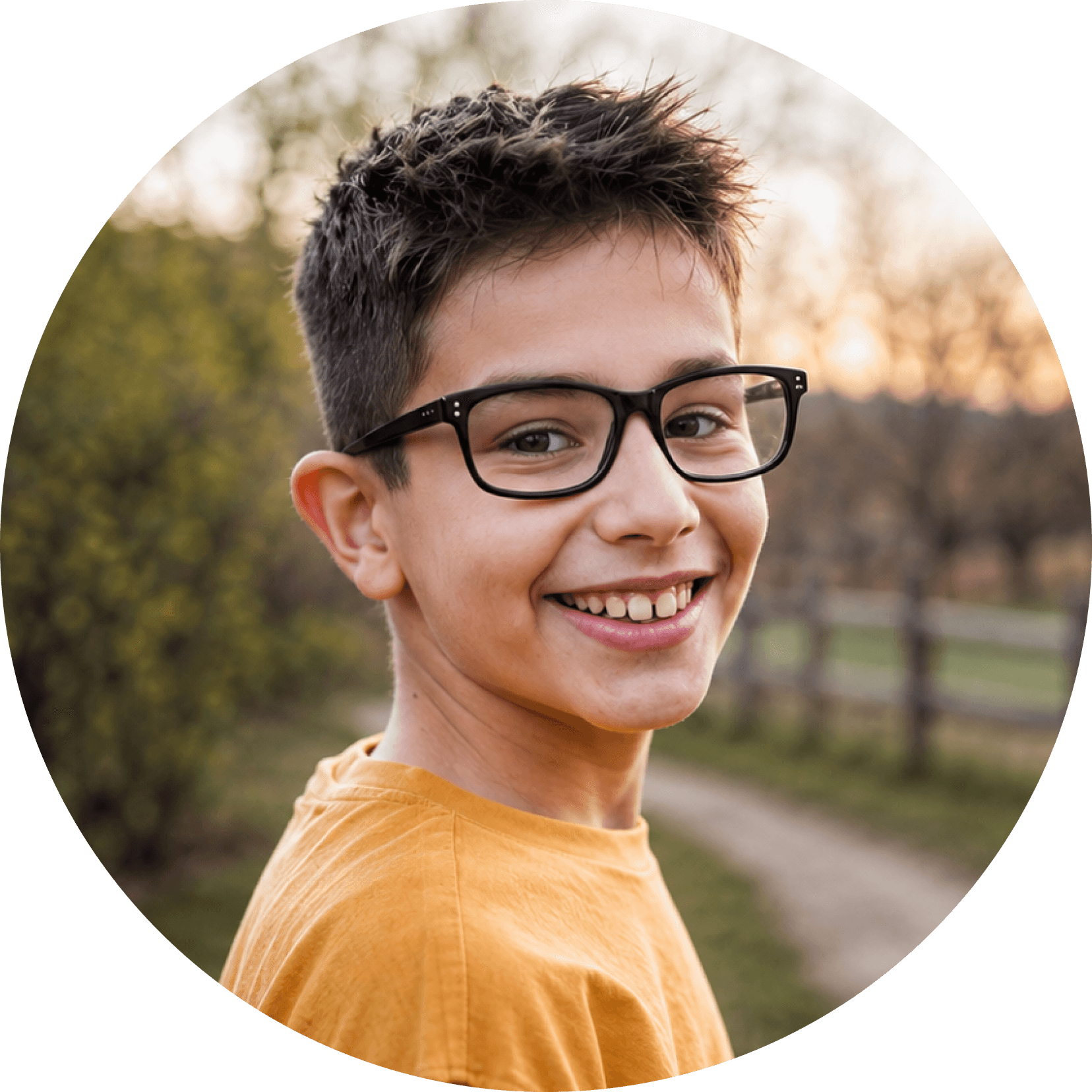
Dima is five when he's diagnosed with diabetes during a family visit to Tartu, a week in hospital and a total shock to the family. Living in Narva with his mother, he also has an active relationship with his father and grandparents. Managing his condition day to day, counting carbohydrates, monitoring his levels, falls mostly on his mother, with the risk that he becomes overly dependent on her alone rather than his wider family sharing the load.
Rasmus
A child born prematurely with multiple disabilities
Rasmus was born severely premature and needs constant lifelong care. His parents, Maret and Tarmo, adapt their home in Antsla, but small-town life means no special kindergarten group or respite care is available. Maret stays home full-time; his sister Sofi grows up alongside it all. The family is afraid to ask local authorities for help, worried it could mean losing Rasmus. What they want isn't extraordinary: a dignified life for him, one clear person to turn to, and certainty that something exists after school ends.
Tiina
A child with spinal muscular atrophy
An observant kindergarten teacher catches Tiina's condition early, and spinal muscular atrophy is diagnosed in time for support to begin. As it progresses she needs physiotherapy, mobility aids, a personal assistant, and eventually a wheelchair and tracheostomy. Her parents, without a driving licence, struggle to reach appointments. Her mother Katrin fights for her while rebuilding her own family after divorce. Tiina wants something ordinary: the same school as everyone else, real friends, independence one day. Her fear is that her health will worsen and others won't accept her.
Kirke
A child with phenylketonuria
Kirke was diagnosed with phenylketonuria shortly after birth and must follow a strict diet for life. Most food is ordered from abroad, prepared at home, and explained to everyone she meets. Her parents manage it largely alone, alongside regular specialist trips to Tartu. What Kirke wants is simple: to eat like her friends, to be accepted, and one day manage her own health without it burdening those around her. Her biggest fear is being excluded for being different.
Kevin
A child with ADHD and anxiety disorders
Kevin's life has never had stability: frequent moves, a father working abroad, a mother struggling with her own mental health. By 14 he's changed schools repeatedly, started drinking, and stopped attending class. Diagnosed with ADHD and anxiety, he doesn't take his medication; nobody around him treats it as urgent. Football is what holds him together. A psychiatry appointment finally changes things: medication, an adapted curriculum, family therapy. He finishes basic school and moves into vocational education. He wants someone who truly understands him, and a life that isn't constant stress.
Aljona
A child with speech and language difficulties
Growing up multilingual, Aljona's speech and language difficulties go unnoticed at first, masked by her mixed-language home. When identified, her mother rejects the recommendation to delay school, so Aljona starts on time and struggles. Meanwhile her parents separate amid a bitter custody battle and financial strain. With intensive, sustained support her situation improves. What she wants most is to be understood by classmates, by teachers, and for her parents to stop fighting.
Steven
A child with intellectual disability and autism spectrum disorder
Steven's needs go unnoticed until mainstream school, where he struggles with learning, social situations, and behaviour. He moves through a private school before landing at Tondi Special School on a simplified curriculum. His financially stable family still finds it hard: his mother manages his aggression alone as her marriage ends, and his parents feel ashamed. With support, Steven finishes basic school and continues at Astangu Vocational Rehabilitation Centre. He wants stability, a calm home, and friend, without fearing he'll be bullied again.
Mari
A child with phenylketonuria
Mari's parents are alcoholics with no support network. Placed in substitute care early, she's separated from her siblings and cycles through foster families, a crisis centre, and a psychiatric clinic. By her teens she's in a detention facility, with no close adult who cares about her. What Mari wants is heartbreakingly ordinary: someone who understands her without controlling her, a normal family, a real chance. She's terrified she'll amount to nothing and end up in prison. She just wants the nightmare to end.
Anna
A child with leukemia
Anna is diagnosed with acute lymphoid leukemia; treatment lasts two and a half years, with follow-up care continuing after. Her weakened immune system keeps her out of school for long stretches. Hers is one of the most complex cases the system has to handle, she and her family need crisis support, counselling, and therapy throughout and after treatment, with the risk of falling through the cracks once active treatment ends and support quietly disappears.
Mart
A child with ADHD
Mart's case is on the milder end, no additional diagnoses, no disability classification. What he needs is psychosocial support, parenting guidance, an adapted learning environment, and teachers who understand ADHD. His father later receives his own ADHD diagnosis, which helps the family understand him better. In his teens he develops performance anxiety at school, with no guarantee it's caught before it deepens into something worse.
Dima
A child with Type 1 diabetes
Dima is five when he's diagnosed with diabetes during a family visit to Tartu, a week in hospital and a total shock to the family. Living in Narva with his mother, he also has an active relationship with his father and grandparents. Managing his condition day to day, counting carbohydrates, monitoring his levels, falls mostly on his mother, with the risk that he becomes overly dependent on her alone rather than his wider family sharing the load.
Rasmus
A child born prematurely with multiple disabilities
Rasmus was born severely premature and needs constant lifelong care. His parents, Maret and Tarmo, adapt their home in Antsla, but small-town life means no special kindergarten group or respite care is available. Maret stays home full-time; his sister Sofi grows up alongside it all. The family is afraid to ask local authorities for help, worried it could mean losing Rasmus. What they want isn't extraordinary: a dignified life for him, one clear person to turn to, and certainty that something exists after school ends.
Tiina
A child with spinal muscular atrophy
An observant kindergarten teacher catches Tiina's condition early, and spinal muscular atrophy is diagnosed in time for support to begin. As it progresses she needs physiotherapy, mobility aids, a personal assistant, and eventually a wheelchair and tracheostomy. Her parents, without a driving licence, struggle to reach appointments. Her mother Katrin fights for her while rebuilding her own family after divorce. Tiina wants something ordinary: the same school as everyone else, real friends, independence one day. Her fear is that her health will worsen and others won't accept her.
Kirke
A child with phenylketonuria
Kirke was diagnosed with phenylketonuria shortly after birth and must follow a strict diet for life. Most food is ordered from abroad, prepared at home, and explained to everyone she meets. Her parents manage it largely alone, alongside regular specialist trips to Tartu. What Kirke wants is simple: to eat like her friends, to be accepted, and one day manage her own health without it burdening those around her. Her biggest fear is being excluded for being different.
Kevin
A child with ADHD and anxiety disorders
Kevin's life has never had stability: frequent moves, a father working abroad, a mother struggling with her own mental health. By 14 he's changed schools repeatedly, started drinking, and stopped attending class. Diagnosed with ADHD and anxiety, he doesn't take his medication; nobody around him treats it as urgent. Football is what holds him together. A psychiatry appointment finally changes things: medication, an adapted curriculum, family therapy. He finishes basic school and moves into vocational education. He wants someone who truly understands him, and a life that isn't constant stress.
Aljona
A child with speech and language difficulties
Growing up multilingual, Aljona's speech and language difficulties go unnoticed at first, masked by her mixed-language home. When identified, her mother rejects the recommendation to delay school, so Aljona starts on time and struggles. Meanwhile her parents separate amid a bitter custody battle and financial strain. With intensive, sustained support her situation improves. What she wants most is to be understood by classmates, by teachers, and for her parents to stop fighting.
Steven
A child with intellectual disability and autism spectrum disorder
Steven's needs go unnoticed until mainstream school, where he struggles with learning, social situations, and behaviour. He moves through a private school before landing at Tondi Special School on a simplified curriculum. His financially stable family still finds it hard: his mother manages his aggression alone as her marriage ends, and his parents feel ashamed. With support, Steven finishes basic school and continues at Astangu Vocational Rehabilitation Centre. He wants stability, a calm home, and friend, without fearing he'll be bullied again.
Mari
A child with phenylketonuria
Mari's parents are alcoholics with no support network. Placed in substitute care early, she's separated from her siblings and cycles through foster families, a crisis centre, and a psychiatric clinic. By her teens she's in a detention facility, with no close adult who cares about her. What Mari wants is heartbreakingly ordinary: someone who understands her without controlling her, a normal family, a real chance. She's terrified she'll amount to nothing and end up in prison. She just wants the nightmare to end.
Anna
A child with leukemia
Anna is diagnosed with acute lymphoid leukemia; treatment lasts two and a half years, with follow-up care continuing after. Her weakened immune system keeps her out of school for long stretches. Hers is one of the most complex cases the system has to handle, she and her family need crisis support, counselling, and therapy throughout and after treatment, with the risk of falling through the cracks once active treatment ends and support quietly disappears.
Mart
A child with ADHD
Mart's case is on the milder end, no additional diagnoses, no disability classification. What he needs is psychosocial support, parenting guidance, an adapted learning environment, and teachers who understand ADHD. His father later receives his own ADHD diagnosis, which helps the family understand him better. In his teens he develops performance anxiety at school, with no guarantee it's caught before it deepens into something worse.
Dima
A child with Type 1 diabetes
Dima is five when he's diagnosed with diabetes during a family visit to Tartu, a week in hospital and a total shock to the family. Living in Narva with his mother, he also has an active relationship with his father and grandparents. Managing his condition day to day, counting carbohydrates, monitoring his levels, falls mostly on his mother, with the risk that he becomes overly dependent on her alone rather than his wider family sharing the load.
Who were we designing for?
Rasmus
A child born prematurely with multiple disabilities
Rasmus was born severely premature and needs constant lifelong care. His parents, Maret and Tarmo, adapt their home in Antsla, but small-town life means no special kindergarten group or respite care is available. Maret stays home full-time; his sister Sofi grows up alongside it all. The family is afraid to ask local authorities for help, worried it could mean losing Rasmus. What they want isn't extraordinary: a dignified life for him, one clear person to turn to, and certainty that something exists after school ends.
Tiina
A child with spinal muscular atrophy
An observant kindergarten teacher catches Tiina's condition early, and spinal muscular atrophy is diagnosed in time for support to begin. As it progresses she needs physiotherapy, mobility aids, a personal assistant, and eventually a wheelchair and tracheostomy. Her parents, without a driving licence, struggle to reach appointments. Her mother Katrin fights for her while rebuilding her own family after divorce. Tiina wants something ordinary: the same school as everyone else, real friends, independence one day. Her fear is that her health will worsen and others won't accept her.
Kirke
A child with phenylketonuria
Kirke was diagnosed with phenylketonuria shortly after birth and must follow a strict diet for life. Most food is ordered from abroad, prepared at home, and explained to everyone she meets. Her parents manage it largely alone, alongside regular specialist trips to Tartu. What Kirke wants is simple: to eat like her friends, to be accepted, and one day manage her own health without it burdening those around her. Her biggest fear is being excluded for being different.
Kevin
A child with ADHD and anxiety disorders
Kevin's life has never had stability: frequent moves, a father working abroad, a mother struggling with her own mental health. By 14 he's changed schools repeatedly, started drinking, and stopped attending class. Diagnosed with ADHD and anxiety, he doesn't take his medication; nobody around him treats it as urgent. Football is what holds him together. A psychiatry appointment finally changes things: medication, an adapted curriculum, family therapy. He finishes basic school and moves into vocational education. He wants someone who truly understands him, and a life that isn't constant stress.
Aljona
A child with speech and language difficulties
Growing up multilingual, Aljona's speech and language difficulties go unnoticed at first, masked by her mixed-language home. When identified, her mother rejects the recommendation to delay school, so Aljona starts on time and struggles. Meanwhile her parents separate amid a bitter custody battle and financial strain. With intensive, sustained support her situation improves. What she wants most is to be understood by classmates, by teachers, and for her parents to stop fighting.
Steven
A child with intellectual disability and autism spectrum disorder
Steven's needs go unnoticed until mainstream school, where he struggles with learning, social situations, and behaviour. He moves through a private school before landing at Tondi Special School on a simplified curriculum. His financially stable family still finds it hard: his mother manages his aggression alone as her marriage ends, and his parents feel ashamed. With support, Steven finishes basic school and continues at Astangu Vocational Rehabilitation Centre. He wants stability, a calm home, and friends, without fearing he'll be bullied again.
Mari
A child with mental health conditions and trauma
Mari's parents are alcoholics with no support network. Placed in substitute care early, she's separated from her siblings and cycles through foster families, a crisis centre, and a psychiatric clinic. By her teens she's in a detention facility, with no close adult who cares about her. What Mari wants is heartbreakingly ordinary: someone who understands her without controlling her, a normal family, a real chance. She's terrified she'll amount to nothing and end up in prison. She just wants the nightmare to end.
Anna
A child with leukemia
Anna is diagnosed with acute lymphoid leukemia; treatment lasts two and a half years, with follow-up care continuing after. Her weakened immune system keeps her out of school for long stretches. Hers is one of the most complex cases the system has to handle, she and her family need crisis support, counselling, and therapy throughout and after treatment, with the risk of falling through the cracks once active treatment ends and support quietly disappears.
Mart
A child with ADHD
Mart's case is on the milder end, no additional diagnoses, no disability classification. What he needs is psychosocial support, parenting guidance, an adapted learning environment, and teachers who understand ADHD. His father later receives his own ADHD diagnosis, which helps the family understand him better. In his teens he develops performance anxiety at school, with no guarantee it's caught before it deepens into something worse.
Dima
A child with Type 1 diabetes
Dima is five when he's diagnosed with diabetes during a family visit to Tartu, a week in hospital and a total shock to the family. Living in Narva with his mother, he also has an active relationship with his father and grandparents. Managing his condition day to day, counting carbohydrates, monitoring his levels, falls mostly on his mother, with the risk that he becomes overly dependent on her alone rather than his wider family sharing the load.
Who were we designing for?
Rasmus
A child born prematurely with multiple disabilities
Rasmus was born severely premature and needs constant lifelong care. His parents, Maret and Tarmo, adapt their home in Antsla, but small-town life means no special kindergarten group or respite care is available. Maret stays home full-time; his sister Sofi grows up alongside it all. The family is afraid to ask local authorities for help, worried it could mean losing Rasmus. What they want isn't extraordinary: a dignified life for him, one clear person to turn to, and certainty that something exists after school ends.
Tiina
A child with spinal muscular atrophy
An observant kindergarten teacher catches Tiina's condition early, and spinal muscular atrophy is diagnosed in time for support to begin. As it progresses she needs physiotherapy, mobility aids, a personal assistant, and eventually a wheelchair and tracheostomy. Her parents, without a driving licence, struggle to reach appointments. Her mother Katrin fights for her while rebuilding her own family after divorce. Tiina wants something ordinary: the same school as everyone else, real friends, independence one day. Her fear is that her health will worsen and others won't accept her.
Kirke
A child with phenylketonuria
Kirke was diagnosed with phenylketonuria shortly after birth and must follow a strict diet for life. Most food is ordered from abroad, prepared at home, and explained to everyone she meets. Her parents manage it largely alone, alongside regular specialist trips to Tartu. What Kirke wants is simple: to eat like her friends, to be accepted, and one day manage her own health without it burdening those around her. Her biggest fear is being excluded for being different.
Kevin
A child with ADHD and anxiety disorders
Kevin's life has never had stability: frequent moves, a father working abroad, a mother struggling with her own mental health. By 14 he's changed schools repeatedly, started drinking, and stopped attending class. Diagnosed with ADHD and anxiety, he doesn't take his medication; nobody around him treats it as urgent. Football is what holds him together. A psychiatry appointment finally changes things: medication, an adapted curriculum, family therapy. He finishes basic school and moves into vocational education. He wants someone who truly understands him, and a life that isn't constant stress.
Aljona
A child with speech and language difficulties
Growing up multilingual, Aljona's speech and language difficulties go unnoticed at first, masked by her mixed-language home. When identified, her mother rejects the recommendation to delay school, so Aljona starts on time and struggles. Meanwhile her parents separate amid a bitter custody battle and financial strain. With intensive, sustained support her situation improves. What she wants most is to be understood by classmates, by teachers, and for her parents to stop fighting.
Steven
A child with intellectual disability and autism spectrum disorder
Steven's needs go unnoticed until mainstream school, where he struggles with learning, social situations, and behaviour. He moves through a private school before landing at Tondi Special School on a simplified curriculum. His financially stable family still finds it hard: his mother manages his aggression alone as her marriage ends, and his parents feel ashamed. With support, Steven finishes basic school and continues at Astangu Vocational Rehabilitation Centre. He wants stability, a calm home, and friends, without fearing he'll be bullied again.
Mari
A child with mental health conditions and trauma
Mari's parents are alcoholics with no support network. Placed in substitute care early, she's separated from her siblings and cycles through foster families, a crisis centre, and a psychiatric clinic. By her teens she's in a detention facility, with no close adult who cares about her. What Mari wants is heartbreakingly ordinary: someone who understands her without controlling her, a normal family, a real chance. She's terrified she'll amount to nothing and end up in prison. She just wants the nightmare to end.
Anna
A child with leukemia
Anna is diagnosed with acute lymphoid leukemia; treatment lasts two and a half years, with follow-up care continuing after. Her weakened immune system keeps her out of school for long stretches. Hers is one of the most complex cases the system has to handle, she and her family need crisis support, counselling, and therapy throughout and after treatment, with the risk of falling through the cracks once active treatment ends and support quietly disappears.
Mart
A child with ADHD
Mart's case is on the milder end, no additional diagnoses, no disability classification. What he needs is psychosocial support, parenting guidance, an adapted learning environment, and teachers who understand ADHD. His father later receives his own ADHD diagnosis, which helps the family understand him better. In his teens he develops performance anxiety at school, with no guarantee it's caught before it deepens into something worse.
Dima
A child with Type 1 diabetes
Dima is five when he's diagnosed with diabetes during a family visit to Tartu, a week in hospital and a total shock to the family. Living in Narva with his mother, he also has an active relationship with his father and grandparents. Managing his condition day to day, counting carbohydrates, monitoring his levels, falls mostly on his mother, with the risk that he becomes overly dependent on her alone rather than his wider family sharing the load.
Insights
The support system assumes highly capable parents who can handle enormous administrative and caregiving demands
The system is built around the most capable — those who can navigate complex bureaucracy, track multiple applications with different deadlines, and advocate loudly for their children. Those with less capacity are left behind. As one workshop participant put it: "You need to be strong, rich and healthy with a good support network." Parents lose their own identity in the process, becoming nothing more than "the parent of a disabled child." Many cannot work due to caregiving demands, and when their child reaches adulthood they lose health insurance and find themselves uncompetitive in the job market. One support system has now created two people in need of support. The burden also spills onto siblings, who are parentified — expected to help care for a brother or sister while their parents work.
#01
Discrimination is built into the system
Children with special needs are seen as less valuable and have little power to influence their own situation. Getting help is sometimes made deliberately difficult. Parents fear speaking openly about their child's condition, and seeking psychological help carries stigma. Parents also feel suspected of abusing the system when they advocate for their rights.
#02
Needs are identified too late
Parents, teachers and doctors often don't recognise a child's needs in time. Help is offered reactively rather than proactively — and when people don't know how to help, they tend not to offer it at all. Children who don't attend kindergarten are particularly at risk of falling through the cracks. What parents actually need are services and support, not a diagnosis — but access to services is still often tied to disability classification.
#03
The system's complexity is a barrier in itself
Applications are numerous, complex and constantly changing. Everything takes time, deadlines differ across services, and gaps can open up between assessments. Information doesn't flow between institutions — parents can't track what help is available or where to look. Services are fragmented, unevenly distributed across regions, and quality varies widely. Complex cases need more flexibility than the system allows. And having to constantly prove a situation that is already overwhelming leads many families to simply give up.
#04
A cliff edge between child and adult services
At 18, the system expects young people to suddenly manage everything themselves — yet the support they've relied on largely disappears. The age at which someone is considered a child differs across services: 16 for work capacity assessment, 17 for compulsory education, 18 for healthcare and social care, 26 for youth services. These inconsistencies leave young people and families falling between systems. Working parents are effectively penalised — local government support is often income-based, so having a job can mean losing benefits. The guardianship process is complex, burdensome and humiliating, and many families don't even apply.
#05
Insights
The support system assumes highly capable parents who can handle enormous administrative and caregiving demands
The system is built around the most capable — those who can navigate complex bureaucracy, track multiple applications with different deadlines, and advocate loudly for their children. Those with less capacity are left behind. As one workshop participant put it: "You need to be strong, rich and healthy with a good support network." Parents lose their own identity in the process, becoming nothing more than "the parent of a disabled child." Many cannot work due to caregiving demands, and when their child reaches adulthood they lose health insurance and find themselves uncompetitive in the job market. One support system has now created two people in need of support. The burden also spills onto siblings, who are parentified — expected to help care for a brother or sister while their parents work.
#01
Discrimination is built into the system
Children with special needs are seen as less valuable and have little power to influence their own situation. Getting help is sometimes made deliberately difficult. Parents fear speaking openly about their child's condition, and seeking psychological help carries stigma. Parents also feel suspected of abusing the system when they advocate for their rights.
#02
Needs are identified too late
Parents, teachers and doctors often don't recognise a child's needs in time. Help is offered reactively rather than proactively — and when people don't know how to help, they tend not to offer it at all. Children who don't attend kindergarten are particularly at risk of falling through the cracks. What parents actually need are services and support, not a diagnosis — but access to services is still often tied to disability classification.
#03
The system's complexity is a barrier in itself
Applications are numerous, complex and constantly changing. Everything takes time, deadlines differ across services, and gaps can open up between assessments. Information doesn't flow between institutions — parents can't track what help is available or where to look. Services are fragmented, unevenly distributed across regions, and quality varies widely. Complex cases need more flexibility than the system allows. And having to constantly prove a situation that is already overwhelming leads many families to simply give up.
#04
A cliff edge between child and adult services
At 18, the system expects young people to suddenly manage everything themselves — yet the support they've relied on largely disappears. The age at which someone is considered a child differs across services: 16 for work capacity assessment, 17 for compulsory education, 18 for healthcare and social care, 26 for youth services. These inconsistencies leave young people and families falling between systems. Working parents are effectively penalised — local government support is often income-based, so having a job can mean losing benefits. The guardianship process is complex, burdensome and humiliating, and many families don't even apply.
#05
Insights
The support system assumes highly capable parents who can handle enormous administrative and caregiving demands
The system is built around the most capable — those who can navigate complex bureaucracy, track multiple applications with different deadlines, and advocate loudly for their children. Those with less capacity are left behind. As one workshop participant put it: "You need to be strong, rich and healthy with a good support network." Parents lose their own identity in the process, becoming nothing more than "the parent of a disabled child." Many cannot work due to caregiving demands, and when their child reaches adulthood they lose health insurance and find themselves uncompetitive in the job market. One support system has now created two people in need of support. The burden also spills onto siblings, who are parentified — expected to help care for a brother or sister while their parents work.
#01
Discrimination is built into the system
Children with special needs are seen as less valuable and have little power to influence their own situation. Getting help is sometimes made deliberately difficult. Parents fear speaking openly about their child's condition, and seeking psychological help carries stigma. Parents also feel suspected of abusing the system when they advocate for their rights.
#02
Needs are identified too late
Parents, teachers and doctors often don't recognise a child's needs in time. Help is offered reactively rather than proactively — and when people don't know how to help, they tend not to offer it at all. Children who don't attend kindergarten are particularly at risk of falling through the cracks. What parents actually need are services and support, not a diagnosis — but access to services is still often tied to disability classification.
#03
The system's complexity is a barrier in itself
Applications are numerous, complex and constantly changing. Everything takes time, deadlines differ across services, and gaps can open up between assessments. Information doesn't flow between institutions — parents can't track what help is available or where to look. Services are fragmented, unevenly distributed across regions, and quality varies widely. Complex cases need more flexibility than the system allows. And having to constantly prove a situation that is already overwhelming leads many families to simply give up.
#04
A cliff edge between child and adult services
At 18, the system expects young people to suddenly manage everything themselves — yet the support they've relied on largely disappears. The age at which someone is considered a child differs across services: 16 for work capacity assessment, 17 for compulsory education, 18 for healthcare and social care, 26 for youth services. These inconsistencies leave young people and families falling between systems. Working parents are effectively penalised — local government support is often income-based, so having a job can mean losing benefits. The guardianship process is complex, burdensome and humiliating, and many families don't even apply.
#05
Design principles
User-centredness
Services should be simple and not burden the user. Support comes to where the child and family are. Unnecessary trips and duplications are eliminated.
Family-centred and life-course approach
Support is planned around the whole family, not just the child, and takes a long-term view of the family's needs and possibilities across all stages of life.
Proactivity
When a need is identified in one part of the system, the right support follows automatically. The next steps are triggered without the family having to start over.
Empowering those in need
The system supports people in finding their best selves and living with dignity and independence. This includes empowering not just families but also the wider support network around them.
Collaboration and network-based support
All parties — family, institutions, specialists, community and support organisations — work together and are active in noticing and helping.
Data collected once
The same information is never asked for twice. Data use is guided by the child's interests and data protection principles. Only those who need it can access it.
Design principles
User-centredness
Services should be simple and not burden the user. Support comes to where the child and family are. Unnecessary trips and duplications are eliminated.
Family-centred and life-course approach
Support is planned around the whole family, not just the child, and takes a long-term view of the family's needs and possibilities across all stages of life.
Proactivity
When a need is identified in one part of the system, the right support follows automatically. The next steps are triggered without the family having to start over.
Empowering those in need
The system supports people in finding their best selves and living with dignity and independence. This includes empowering not just families but also the wider support network around them.
Collaboration and network-based support
All parties — family, institutions, specialists, community and support organisations — work together and are active in noticing and helping.
Data collected once
The same information is never asked for twice. Data use is guided by the child's interests and data protection principles. Only those who need it can access it.
Design principles
User-centredness
Services should be simple and not burden the user. Support comes to where the child and family are. Unnecessary trips and duplications are eliminated.
Family-centred and life-course approach
Support is planned around the whole family, not just the child, and takes a long-term view of the family's needs and possibilities across all stages of life.
Proactivity
When a need is identified in one part of the system, the right support follows automatically. The next steps are triggered without the family having to start over.
Empowering those in need
The system supports people in finding their best selves and living with dignity and independence. This includes empowering not just families but also the wider support network around them.
Collaboration and network-based support
All parties — family, institutions, specialists, community and support organisations — work together and are active in noticing and helping.
Data collected once
The same information is never asked for twice. Data use is guided by the child's interests and data protection principles. Only those who need it can access it.
Solutions
The operating logic of the newly designed support system
A positive support culture
The central message of the new system is simple: "We are here to help you, parent, on this journey." This represents a fundamental shift. From a system that places the burden of navigation on families to one that actively reaches out, supports and empowers them.
This means treating the whole family, not just the child. It means coordinators who check in proactively rather than waiting to be contacted. It means communication that assumes parents know nothing about the system rather than assuming they know everything. And it means building a culture across institutions, schools and local authorities where children with special needs are valued and included, not marginalised.
A child's digital development record
Every child in Estonia would have a single digital record that follows them from birth to adulthood, bringing together information from across health, education and social care. Information is entered once and shared with the parent's consent, never asked for twice.
When a child's needs are identified in one part of the system, the right support follows automatically. A diagnosis triggers the relevant services. A change in circumstances updates the record. The parent sees everything in one place and controls who has access to what.
Coordinators use the same platform to monitor the child's development, communicate with specialists and ensure nothing falls through the cracks. For parents who struggle with digital tools, a coordinator can help, or the whole process can happen through non-digital means.
The result is a system where no family has to start over every time they cross an institutional boundary.

Solutions
The operating logic of the newly designed support system
A positive support culture
The central message of the new system is simple: "We are here to help you, parent, on this journey." This represents a fundamental shift. From a system that places the burden of navigation on families to one that actively reaches out, supports and empowers them.
This means treating the whole family, not just the child. It means coordinators who check in proactively rather than waiting to be contacted. It means communication that assumes parents know nothing about the system rather than assuming they know everything. And it means building a culture across institutions, schools and local authorities where children with special needs are valued and included, not marginalised.
A child's digital development record
Every child in Estonia would have a single digital record that follows them from birth to adulthood, bringing together information from across health, education and social care. Information is entered once and shared with the parent's consent, never asked for twice.
When a child's needs are identified in one part of the system, the right support follows automatically. A diagnosis triggers the relevant services. A change in circumstances updates the record. The parent sees everything in one place and controls who has access to what.
Coordinators use the same platform to monitor the child's development, communicate with specialists and ensure nothing falls through the cracks. For parents who struggle with digital tools, a coordinator can help, or the whole process can happen through non-digital means.
The result is a system where no family has to start over every time they cross an institutional boundary.
Solutions
The operating logic of the newly designed support system
A positive support culture
The central message of the new system is simple: "We are here to help you, parent, on this journey." This represents a fundamental shift. From a system that places the burden of navigation on families to one that actively reaches out, supports and empowers them.
This means treating the whole family, not just the child. It means coordinators who check in proactively rather than waiting to be contacted. It means communication that assumes parents know nothing about the system rather than assuming they know everything. And it means building a culture across institutions, schools and local authorities where children with special needs are valued and included, not marginalised.
A child's digital development record
Every child in Estonia would have a single digital record that follows them from birth to adulthood, bringing together information from across health, education and social care. Information is entered once and shared with the parent's consent, never asked for twice.
When a child's needs are identified in one part of the system, the right support follows automatically. A diagnosis triggers the relevant services. A change in circumstances updates the record. The parent sees everything in one place and controls who has access to what.
Coordinators use the same platform to monitor the child's development, communicate with specialists and ensure nothing falls through the cracks. For parents who struggle with digital tools, a coordinator can help, or the whole process can happen through non-digital means.
The result is a system where no family has to start over every time they cross an institutional boundary.
The architecture of the new support system
The new support system is built around one central idea: no family should have to figure it out alone. Instead of expecting parents to navigate a fragmented maze of institutions, the system comes to them — proactively, through coordinators who take responsibility for making sure the right help reaches the right child at the right time.
Support system tire #1
Support close to the child
The first tier is built around the principle that help should come to the child, not the other way around. A network of coordinators — based in schools, kindergartens and local authorities — monitors children's development, identifies needs early and organises support through local specialists.
Every child has a family physician and a child welfare coordinator at the local authority. Children in educational settings also have a special needs coordinator who takes the lead on school-based support and is the primary contact for day-to-day coordination. The lead coordinator for each child is always clearly communicated to the family and the support network through the digital record.
Early identification is central. When Tiina's kindergarten teacher notices her balance difficulties, she triggers the support process — Tiina doesn't have to wait until she falls behind. Because Steven doesn't attend kindergarten, his development is assessed separately so that his needs are identified before school begins — preventing many of the problems that follow him later. Aljona's multilingual background is itself a signal that her language development may need additional support — the system flags this proactively rather than waiting for problems to emerge.
When a child needs only one service, the coordinator organises it directly. When needs are more complex, the coordinator creates a wellbeing plan: a comprehensive, goal-oriented roadmap that brings together all the services the child and family need, replacing the current fragmented plans and managed through the digital record.
For Aljona, the wellbeing plan brings together speech therapy, special education support and language learning, as well as mediation and counselling for the family. For Kevin, it coordinates behavioural and occupational therapy, an individual curriculum at school and family therapy. Tiina's personal assistant arrangement is coordinated by her school's special needs coordinator, who also ensures it continues when she moves to upper secondary school.
The system also recognises that supporting a child means supporting the whole family. Rasmus's condition places the entire family under enormous strain — as his needs change over time, his support plan adapts accordingly. His parents need help maintaining their ability to work and live their own lives. The new system plans for this from the start, rather than responding only after crisis hits.
Support system tire #2
National competence centre for complex cases
When a child's needs go beyond what the local network can manage, the case is referred to a national children's welfare competence centre. Here, specialists from across health, education, social care and employment come together to assess the situation and produce a needs description — a detailed, data-driven document that defines the required support, disability classification where applicable, rehabilitation needs and educational recommendations.
This assessment happens without asking the family to travel or repeat information they have already provided. The competence centre works from data already in the child's development record. If gaps remain, specialists reach out to those who have already worked with the child for clarification. Only as a last resort do specialists visit the child directly — and when they do, they come to an environment that is familiar and safe for the child, never the other way around.
For Rasmus, whose profound disability means his situation is well-documented from birth, the system doesn't require unnecessary reassessment as he grows older. When he reaches adulthood, the appropriate adult support is assigned based on what is already known.
The competence centre also trains and supports first-tier coordinators, develops the monitoring tools used across the system and ensures consistent quality of assessment across Estonia.
Support system tire #3
Policy and oversight
The third tier operates at the level of ministries and the Chancellor of Justice. It develops the policies and regulations that govern the system, monitors its performance and provides families with a channel for complaints or questions if things go wrong at lower levels.
The support system's roles are distributed across different levels, from local coordinators to national specialists to policy oversight

System in action
Here's how the redesigned system plays out in practice, from the digital infrastructure connecting institutions to what it actually feels like for a child and their family.
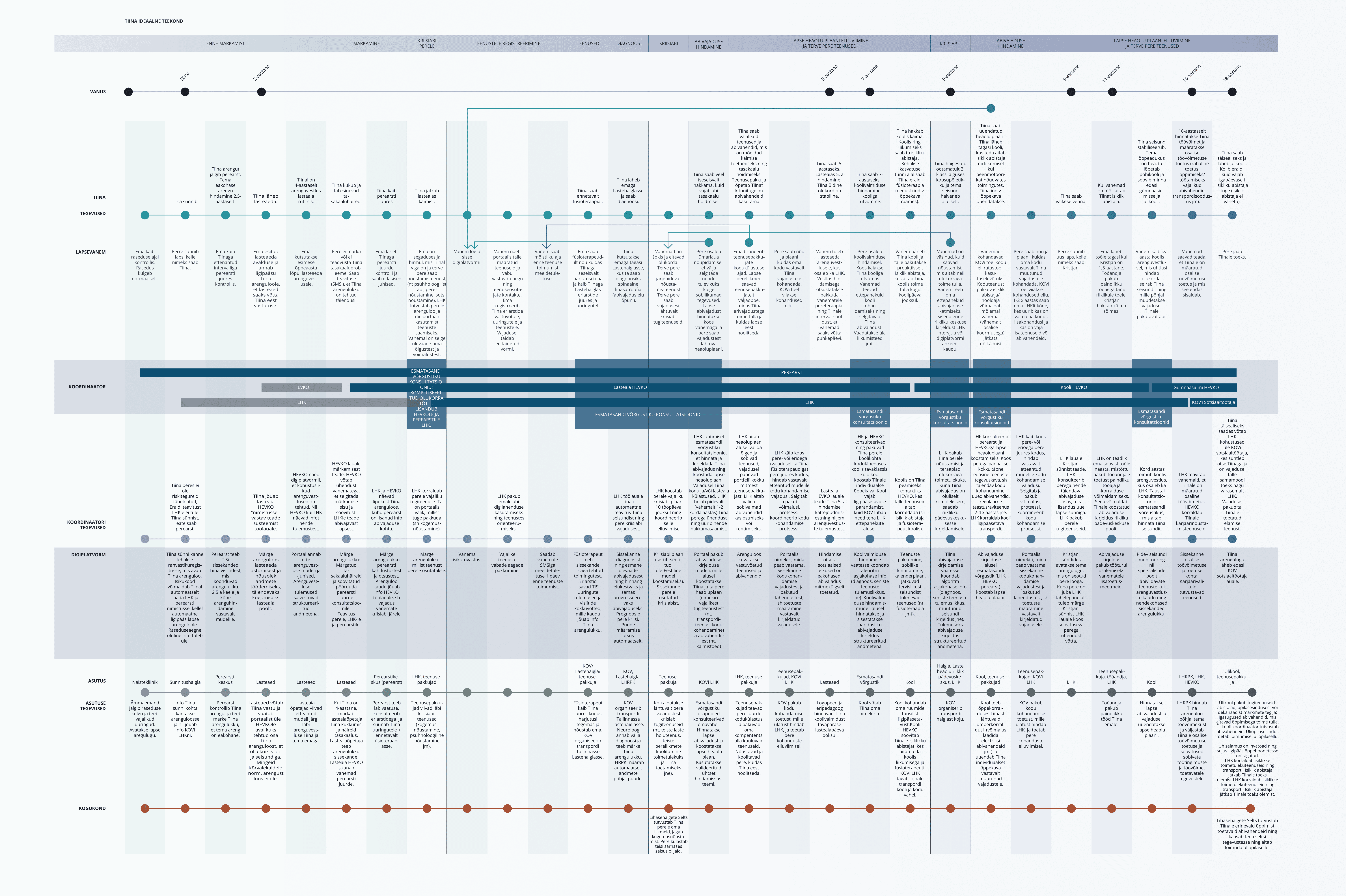
Tiina's journey shows what this looks like from the inside, early identification, a coordinated wellbeing plan, and support that follows her as she moves through school
The digital development record connects health, education and social care in real time, so information is entered once and shared automatically wherever it's needed.

The architecture of the new support system
The new support system is built around one central idea: no family should have to figure it out alone. Instead of expecting parents to navigate a fragmented maze of institutions, the system comes to them — proactively, through coordinators who take responsibility for making sure the right help reaches the right child at the right time.
Support system tire #1
Support close to the child
The first tier is built around the principle that help should come to the child, not the other way around. A network of coordinators — based in schools, kindergartens and local authorities — monitors children's development, identifies needs early and organises support through local specialists.
Every child has a family physician and a child welfare coordinator at the local authority. Children in educational settings also have a special needs coordinator who takes the lead on school-based support and is the primary contact for day-to-day coordination. The lead coordinator for each child is always clearly communicated to the family and the support network through the digital record.
Early identification is central. When Tiina's kindergarten teacher notices her balance difficulties, she triggers the support process — Tiina doesn't have to wait until she falls behind. Because Steven doesn't attend kindergarten, his development is assessed separately so that his needs are identified before school begins — preventing many of the problems that follow him later. Aljona's multilingual background is itself a signal that her language development may need additional support — the system flags this proactively rather than waiting for problems to emerge.
When a child needs only one service, the coordinator organises it directly. When needs are more complex, the coordinator creates a wellbeing plan: a comprehensive, goal-oriented roadmap that brings together all the services the child and family need, replacing the current fragmented plans and managed through the digital record.
For Aljona, the wellbeing plan brings together speech therapy, special education support and language learning, as well as mediation and counselling for the family. For Kevin, it coordinates behavioural and occupational therapy, an individual curriculum at school and family therapy. Tiina's personal assistant arrangement is coordinated by her school's special needs coordinator, who also ensures it continues when she moves to upper secondary school.
The system also recognises that supporting a child means supporting the whole family. Rasmus's condition places the entire family under enormous strain — as his needs change over time, his support plan adapts accordingly. His parents need help maintaining their ability to work and live their own lives. The new system plans for this from the start, rather than responding only after crisis hits.
Support system tire #2
National competence centre for complex cases
When a child's needs go beyond what the local network can manage, the case is referred to a national children's welfare competence centre. Here, specialists from across health, education, social care and employment come together to assess the situation and produce a needs description — a detailed, data-driven document that defines the required support, disability classification where applicable, rehabilitation needs and educational recommendations.
This assessment happens without asking the family to travel or repeat information they have already provided. The competence centre works from data already in the child's development record. If gaps remain, specialists reach out to those who have already worked with the child for clarification. Only as a last resort do specialists visit the child directly — and when they do, they come to an environment that is familiar and safe for the child, never the other way around.
For Rasmus, whose profound disability means his situation is well-documented from birth, the system doesn't require unnecessary reassessment as he grows older. When he reaches adulthood, the appropriate adult support is assigned based on what is already known.
The competence centre also trains and supports first-tier coordinators, develops the monitoring tools used across the system and ensures consistent quality of assessment across Estonia.
Support system tire #3
Policy and oversight
The third tier operates at the level of ministries and the Chancellor of Justice. It develops the policies and regulations that govern the system, monitors its performance and provides families with a channel for complaints or questions if things go wrong at lower levels.
The support system's roles are distributed across different levels, from local coordinators to national specialists to policy oversight
System in action
Here's how the redesigned system plays out in practice, from the digital infrastructure connecting institutions to what it actually feels like for a child and their family.
Tiina's journey shows what this looks like from the inside, early identification, a coordinated wellbeing plan, and support that follows her as she moves through school
The digital development record connects health, education and social care in real time, so information is entered once and shared automatically wherever it's needed.
When the child becomes an adult
As the original personas moved from childhood into adolescence and adulthood, a new set of problems emerged that the three tier support system alone couldn't solve. In 2022, we extended the work to Dima, Tiina, Mari, and Steven's journeys past eighteen, focusing on three areas the earlier project hadn't touched, how a person's disability is formally assessed, how rehabilitation is delivered, and how assistive devices get funded and allocated. Each of these ran through a different institution, the Social Insurance Board, the health insurance fund, and the unemployment fund, so families were sent through disconnected processes to secure services that should have felt like one continuous system. We redesigned this into a single four stage flow, noticing, assessment, case coordination, and support delivery, mirroring the proactive philosophy from the original project but built specifically for adult disability services. The result meant Steven's transition into adult support no longer meant starting from zero, and Dima's diabetes related needs could be assessed once and carried forward rather than repeatedly re-proven. It's a smaller case study inside a bigger one, proof that the same design thinking held up when the problem changed shape.

Reflection
Working on this project for over a year and a half taught me that service design for vulnerable groups demands a different kind of care than most other work. I couldn't just design for efficiency, I had to design for dignity, for parents who were already exhausted, and for children whose needs didn't fit into neat categories. My role sat between the research and the systems thinking, running the interviews and workshops alongside Triin, then translating what we heard into journey maps and a service architecture that institutions could actually implement, not just a vision that looked good on paper. The hardest part wasn't the complexity of the bureaucracy, it was resisting the urge to solve everything at once, and instead figuring out which changes would create the most relief for families with the resources the ministry actually had. What stayed with me most is how much of the suffering in this system wasn't caused by any single failure, but by nobody being responsible for the whole picture, and how much better things get when someone finally is.
But wait, there's more


But wait, there's more
But wait, there's more
The architecture of the new support system
The new support system is built around one central idea: no family should have to figure it out alone. Instead of expecting parents to navigate a fragmented maze of institutions, the system comes to them — proactively, through coordinators who take responsibility for making sure the right help reaches the right child at the right time.
Support system tire #1
Support close to the child
The first tier is built around the principle that help should come to the child, not the other way around. A network of coordinators — based in schools, kindergartens and local authorities — monitors children's development, identifies needs early and organises support through local specialists.
Every child has a family physician and a child welfare coordinator at the local authority. Children in educational settings also have a special needs coordinator who takes the lead on school-based support and is the primary contact for day-to-day coordination. The lead coordinator for each child is always clearly communicated to the family and the support network through the digital record.
Early identification is central. When Tiina's kindergarten teacher notices her balance difficulties, she triggers the support process — Tiina doesn't have to wait until she falls behind. Because Steven doesn't attend kindergarten, his development is assessed separately so that his needs are identified before school begins — preventing many of the problems that follow him later. Aljona's multilingual background is itself a signal that her language development may need additional support — the system flags this proactively rather than waiting for problems to emerge.
When a child needs only one service, the coordinator organises it directly. When needs are more complex, the coordinator creates a wellbeing plan: a comprehensive, goal-oriented roadmap that brings together all the services the child and family need, replacing the current fragmented plans and managed through the digital record.
For Aljona, the wellbeing plan brings together speech therapy, special education support and language learning, as well as mediation and counselling for the family. For Kevin, it coordinates behavioural and occupational therapy, an individual curriculum at school and family therapy. Tiina's personal assistant arrangement is coordinated by her school's special needs coordinator, who also ensures it continues when she moves to upper secondary school.
The system also recognises that supporting a child means supporting the whole family. Rasmus's condition places the entire family under enormous strain — as his needs change over time, his support plan adapts accordingly. His parents need help maintaining their ability to work and live their own lives. The new system plans for this from the start, rather than responding only after crisis hits.
Support system tire #2
National competence centre for complex cases
When a child's needs go beyond what the local network can manage, the case is referred to a national children's welfare competence centre. Here, specialists from across health, education, social care and employment come together to assess the situation and produce a needs description — a detailed, data-driven document that defines the required support, disability classification where applicable, rehabilitation needs and educational recommendations.
This assessment happens without asking the family to travel or repeat information they have already provided. The competence centre works from data already in the child's development record. If gaps remain, specialists reach out to those who have already worked with the child for clarification. Only as a last resort do specialists visit the child directly — and when they do, they come to an environment that is familiar and safe for the child, never the other way around.
For Rasmus, whose profound disability means his situation is well-documented from birth, the system doesn't require unnecessary reassessment as he grows older. When he reaches adulthood, the appropriate adult support is assigned based on what is already known.
The competence centre also trains and supports first-tier coordinators, develops the monitoring tools used across the system and ensures consistent quality of assessment across Estonia.
Support system tire #3
Policy and oversight
The third tier operates at the level of ministries and the Chancellor of Justice. It develops the policies and regulations that govern the system, monitors its performance and provides families with a channel for complaints or questions if things go wrong at lower levels.
Tiina's journey shows what this looks like from the inside, early identification, a coordinated wellbeing plan, and support that follows her as she moves through school
The digital development record connects health, education and social care in real time, so information is entered once and shared automatically wherever it's needed.
As the original personas moved from childhood into adolescence and adulthood, a new set of problems emerged that the three tier support system alone couldn't solve. In 2022, we extended the work to Dima, Tiina, Mari, and Steven's journeys past eighteen, focusing on three areas the earlier project hadn't touched, how a person's disability is formally assessed, how rehabilitation is delivered, and how assistive devices get funded and allocated. Each of these ran through a different institution, the Social Insurance Board, the health insurance fund, and the unemployment fund, so families were sent through disconnected processes to secure services that should have felt like one continuous system. We redesigned this into a single four stage flow, noticing, assessment, case coordination, and support delivery, mirroring the proactive philosophy from the original project but built specifically for adult disability services. The result meant Steven's transition into adult support no longer meant starting from zero, and Dima's diabetes related needs could be assessed once and carried forward rather than repeatedly re-proven. It's a smaller case study inside a bigger one, proof that the same design thinking held up when the problem changed shape.
When the child becomes an adult
Reflection
Working on this project for over a year and a half taught me that service design for vulnerable groups demands a different kind of care than most other work. I couldn't just design for efficiency, I had to design for dignity, for parents who were already exhausted, and for children whose needs didn't fit into neat categories. My role sat between the research and the systems thinking, running the interviews and workshops alongside Triin, then translating what we heard into journey maps and a service architecture that institutions could actually implement, not just a vision that looked good on paper. The hardest part wasn't the complexity of the bureaucracy, it was resisting the urge to solve everything at once, and instead figuring out which changes would create the most relief for families with the resources the ministry actually had. What stayed with me most is how much of the suffering in this system wasn't caused by any single failure, but by nobody being responsible for the whole picture, and how much better things get when someone finally is.
Reflection
Working on this project for over a year and a half taught me that service design for vulnerable groups demands a different kind of care than most other work. I couldn't just design for efficiency, I had to design for dignity, for parents who were already exhausted, and for children whose needs didn't fit into neat categories. My role sat between the research and the systems thinking, running the interviews and workshops alongside Triin, then translating what we heard into journey maps and a service architecture that institutions could actually implement, not just a vision that looked good on paper. The hardest part wasn't the complexity of the bureaucracy, it was resisting the urge to solve everything at once, and instead figuring out which changes would create the most relief for families with the resources the ministry actually had. What stayed with me most is how much of the suffering in this system wasn't caused by any single failure, but by nobody being responsible for the whole picture, and how much better things get when someone finally is.
Reflection
Working on this project for over a year and a half taught me that service design for vulnerable groups demands a different kind of care than most other work. I couldn't just design for efficiency, I had to design for dignity, for parents who were already exhausted, and for children whose needs didn't fit into neat categories. My role sat between the research and the systems thinking, running the interviews and workshops alongside Triin, then translating what we heard into journey maps and a service architecture that institutions could actually implement, not just a vision that looked good on paper. The hardest part wasn't the complexity of the bureaucracy, it was resisting the urge to solve everything at once, and instead figuring out which changes would create the most relief for families with the resources the ministry actually had. What stayed with me most is how much of the suffering in this system wasn't caused by any single failure, but by nobody being responsible for the whole picture, and how much better things get when someone finally is.